
Water is a fundamental and indispensable element of life on Earth; however, it is also a primary component of the climate issue we are facing today. Climate change is typically characterized by increased temperatures and melting ice; however, the first and most profound effect on people will occur due to water.
The accelerating and unstable global hydrological system (i.e., the global system for the circulation of ocean water and the transfer of precipitation to land) is driving rapidly decreasing access, quality and predictability of fresh water supplies.
This article will address how climate change is exacerbating the problem of water scarcity and what implications this will have for billions of individuals living with water stress.
The Disruption of the Global Water Cycle
Climate change has increased the overall speed of the hydrological cycle (i.e., the rate at which water cycles through the environment) throughout the last decade. When the mean temperature increases, the amount of vapour that evaporates from the earth also increases (i.e., more vapour means more water in the atmosphere). As a result, UN-Water (2024) indicates that the global precipitation is increasing; however, it is a distributed across the globe very unequally.
Regions that are already wet are becoming wetter, resulting in catastrophic flooding and regions that are arid or semi-arid are becoming even drier. For communities that depend upon water resources, the lack of predictability will make it nearly impossible to manage supplies safely and effectively (UN-Water, 2024; National Geographic, 2023).
Melting Glaciers and Declining Terrestrial Storage
Mountains serve as water towers in many regions, storing glaciers and snowpack that provide fresh water when they melt during a dry period. However, warmer temperatures are resulting in melting glaciers that are disappearing rapidly.
According to the United Nations (2024), terrestrial water storage (such as soil moisture, snow, and ice) has been lost at 1 cm a year for the last twenty years. This is a critical loss to water security and affects more than 1 billion people who depend on glacial melt as a source of drinking water, sanitation, and agricultural irrigation.
Water Quality: The “Invisible” Scarcity
Water scarcity is about quantity and quality. Even when water is available, disasters caused by climate change can result in the water becoming unusable.
Flooding and Contamination: When heavy rain follows or accompanies flooding, it often overwhelms sewage systems and washes pollution, muck, and microorganism to fresh water sources already there to draw from, leaving existing water supplies unfit for drinking (Lifewater, 2023; ScienceDirect, 2024).
Saltwater Intrusion: As temperatures increase globally relative to the world’s average temperature and ice is melted causing sea levels to rise, saltwater will seep into coastal freshwater aquifers. This process is referred to as saltwater intrusion and causes permanent contamination of the aquifers upon which coastal communities depend for their very existence (National Geographic, 2023).
The Human Cost: Health and Equity
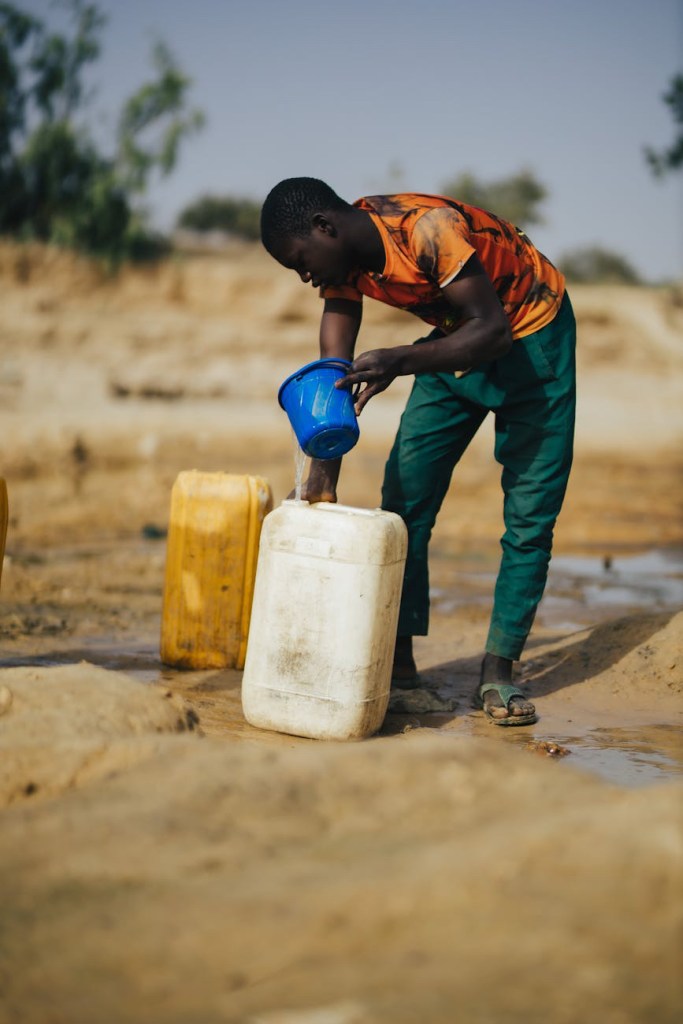
Water is not equitably distributed around the planet and it is due to this water crisis that is a crisis of equity. There are currently approximately 2 billion people without access to safe drinking water, and half of the world’s population has been affected by extremely limited access to water at some time during the year (UN, 2024).
The cycle of poverty and disease becomes particularly drastic for poor communities, particularly in Sub-Saharan Africa and South Asia. Contaminated sources are used when there isn’t easy access to safe clean drinking water. As a result, many people develop waterborne illnesses such as cholera and dysentery. Every single day over one thousand children under the age of five die from disease associated with inadequate water and sanitation (Lifewater, 2023).
Moving Toward Climate-Resilient Water Management
We cannot resolve the climate change issue without resolving the global water supply crisis. We must adapt to climate changes with no exceptions. Strategies for adaptation include:
- Climate-Smart Agriculture: Implementing drip irrigation and drought tolerant crops in order to decrease 70% of all freshwater being used for agricultural purposes (UN, 2024)
- Improved Infrastructure: Investments in water supply and sanitation system that will withstand extreme weather and contamination events (ScienceDirect, 2024)
- Integrated Water Management: Increased cross-border cooperation in managing shared rivers and aquifers, especially as these natural resources continue to decline (UN-Water, 2024)
In closing, water is at the core of the climate change issue. Climate change is changing how we depend on the natural cycle of the environment, resulting in an overabundance, shortage, and lack of contaminant-free sources of water. Global solutions must be coordinated on a global scale with an emphasis on emission reductions, and assurance integrating safe access to clean water as an essential human right.
References
Lifewater. (2023). The problem: A global water crisis. https://lifewater.ca/the-problem-a-global-water-crisis/
National Geographic. (2023). How climate change impacts water access. https://education.nationalgeographic.org/resource/how-climate-change-impacts-water-access/
ScienceDirect. (2024). The impact of climate change on global water resources: Challenges and solutions. https://www.sciencedirect.com/science/article/pii/S221458182400226X
United Nations. (2024). Water – At the center of the climate crisis. https://www.un.org/en/climatechange/science/climate-issues/water
UN-Water. (2024). Water and climate change. https://www.unwater.org/water-facts/water-and-climate-change
 Step to Light
This is an exceptionally well-written and insightful piece. You’ve done a wonderful job explaining a complex global issue with clarity, structure, and depth, making it both informative and compelling to read. I especially appreciate how you connected scientific concepts like the hydrological cycle and terrestrial water storage to real human impacts—it gives the article both intellectual strength and emotional resonance. Your use of credible references and organized sections adds strong academic credibility as well. Truly impressive work that raises awareness about a critical issue in a thoughtful and powerful way.
LikeLiked by 1 person
This was very interesting and informative. thank you for sharing it
LikeLiked by 1 person