
The modern family unit is increasingly being diversified with the growing number of single-parent families; however, being a single parent does not have a singular experience. It has been shown that many factors, such as expectations about parenting based upon one’s gender as well as social stigmas and differing economic pressures, play a significant role in shaping the experience of being a single parent.
Understanding how single mothers or single fathers operate within their societal structures in order to provide adequate support and resources for their children is necessary if support systems will be improved and resilient environments for children will exist.
Expectations Can Be Heavy: Challenges Based Upon Gender:
According to Albritton et al. (2014), mothers and fathers typically face very different obstacles based on their gendered roles as parents; there are significant differences in the parenting challenges faced by low-income, young mothers and fathers.
Single Mothers: Often experience “unbalanced parenting” and feel a heightened sense of being unprepared for the physical and emotional safety of their children. For many women, the challenge lies in the sheer exhaustion of being a “full-time parent” without a partner to share the load, leading to higher levels of reported parental stress (Albritton et al., 2014).
Single Fathers: Their primary stressor frequently revolves around financial provision. Men in single-parent roles often feel the weight of being the sole provider, citing limited finances and the pressure to pay bills as their most significant parenting challenge (Albritton et al., 2014).
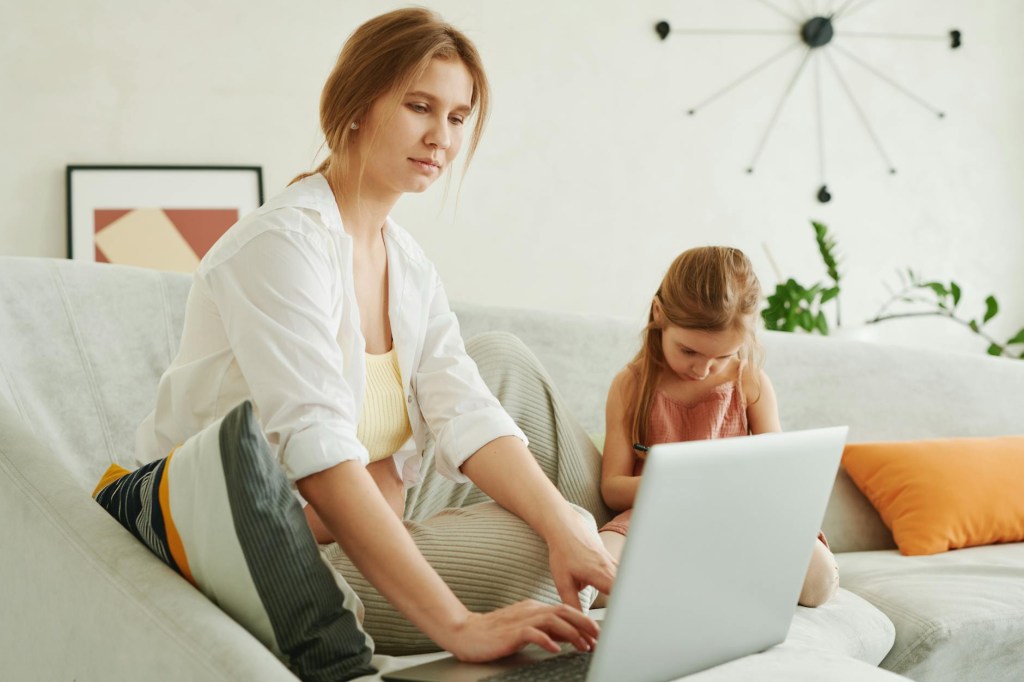
Impact on Child Development and Behaviour
Many people question whether a single-parent family’s structure affects how well a child develops, but new information shows that the environment is more important than the structure.
Chavda and Nisarga (2023) found that when a parent does not live in the home with a child (as in a single-parent household), children may have difficulties (such as low grades or being easily emotional) more because there is no second parent to help them meet the challenges of being “overburdened” or having too few people available to give them social support than because of something wrong with the parent’s ability to raise a child. For example, the UK Millennium Cohort Study shows that the majority of children living in single-father or single-mother homes have similar behavioral outcomes as children living in two-parent homes if their parents have access to the same supports or resources (Cabrera et al., 2022).
This suggests that the main factors that determine how well a child will develop are the available economic and social resources, regardless of the parent’s sex.
Breaking the Mold: Gender Role Flexibility
Research has found strong support for weakening or even eliminating the traditional expectations associated with male or female roles within single-parent families as they are becoming more fluid due to the dual nature of parenting roles. For example, female single parents often exhibit greater confidence and independence than they did in the past, while male single parents tend to exhibit more nurturing and gentle behaviours (Albritton et al., 2014; Chavda N. J.; Nisarga).
While this flexibility can benefit children by providing them an opportunity to be raised with androgynous or adaptive gender role expectations, certain circumstances, such as having fewer of one kind of role model (same-gender), may result in some challenges, such as “impression bias” or being less able to socially integrate within their community if they are not able to see many forms of gender expression (Cabrera, et al., 2022).
Moving Forward: Building Resilience
The experience of single parenting is an extraordinary journey of resilience. To enhance the outcomes for these families, we must change our focus from structural deficits (deficiency-based approach) to protective factors (strengths-based approach).
Economic Support – Continuing or creating financial relief for single fathers and mothers.
Social Networks – Increasing the accessibility to community supports, child care resources and flexible work environments (Chavda & Nisarga, 2023).
Parental Well-Being – Addressing the mental health of the parent in order to decrease the “spillover” effect of their stress onto their children.
By acknowledging the unique gendered pressures experienced by single parents, we can pave the way towards a society that supports all families and all children to achieve their maximum potential.
References
Albritton, T., Angley, M., Grandelski, V., Hansen, N., & Kershaw, T. (2014). Looking for solutions: Gender differences in relationship and parenting challenges among low-income, young parents. Family Process, 53(4), 686–701. https://doi.org/10.1111/famp.12080
Cabrera, N. J., Hofferth, S. L., & Gostiev, F. (2022). Gendered associations between single parenthood and child behavior problems in the United Kingdom. International Journal of Environmental Research and Public Health, 19(24), 16726. https://doi.org/10.3390/ijerph192416726
Chavda, K., & Nisarga, V. (2023). Single parenting: Impact on child’s development. Journal of Indian Association for Child and Adolescent Mental Health, 19(1), 14–20. https://doi.org/10.1177/09731342231179017
 Step to Light
I feel a lot depends on what type of person the parent is and how the parents treat each other, if the child feel comfortable during the transition from one parents home to the others, as if there is a lot of tension and hostility between the parents it will have a negative effect on the child. Children need good, positive role models or both genders but more so their own gender, especially if the same gender parent isn’t around or is a useless waste of space. Children raised in single parent households can turn out just fine but sadly not all do
LikeLiked by 1 person