
A country with a surplus of grain may be experiencing a return on investment compared to a neighbouring state experiencing drought conditions. Global trade and complex supply chains allow food to reach the table of consumers living thousands of miles away from the farm. The journey taken by food from a South American farm to an Asian dinner table is a remarkable feat of modern logistics. However, it is a fragile network that is affected by factors such as government policies, the economy, and technological factors.
To eliminate hunger by increasing the efficiency and equity of food distribution systems, we must understand the importance of global trade when evaluating existing food security throughout the world. This article will highlight how international markets and supply chains provide the support necessary to improve global food security.
Global Trade as a Buffer Against Scarcity
Global trade’s major function is to balance the unjust distribution of agricultural products around the world. Not every country has enough tillable land or water to sustain its own needs. The International Trade Council (2023) states that global trade helps to promote food security by moving food from countries with a surplus to countries with a shortage, reducing the likelihood of food shortages caused by local failures of the crop growing.
Without international trade, localized weather patterns (e.g. flooding, heat waves) would cause immediate worldwide famines. Global trade through integrated global trade creates more total world food supply then they would be through separated regions’ food supply (International Trade Council, 2023).
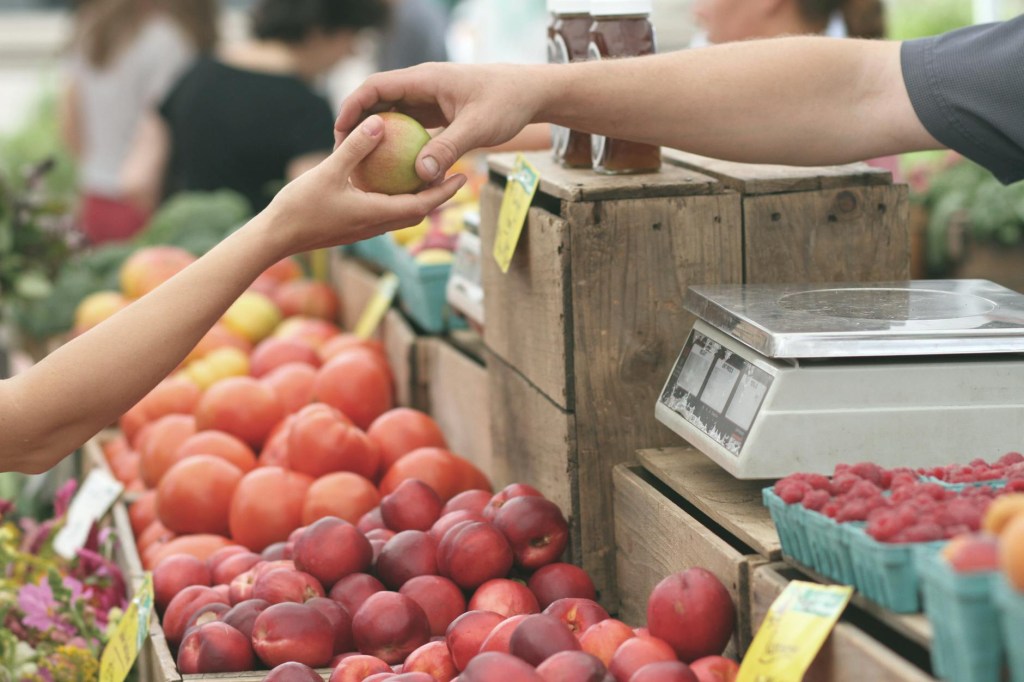
The Transformation of Food Supply Chains
Massive changes are taking place in how we distribute food. As noted by the Food and Agricultural Organisation (FAO, 2024), the food supply chain is long and complex with much longer and complicated supply chains that are transitioning to a modern, global supply chain from a local, traditional way means food will have more complexity.
The transition to a global supply chain will be driven by:
Urbanization: The continual movement of populations into cities will cause demands on food supply chains to reach the city.
Midstream participants; an increasing amount of food will be delivered through “midstream”; the middle of the food system where food is traded and processed by a host of people who become the majority of those involved in the distribution of food globally.
Value Addition: Socially and environmentally sustainable food supply chains no longer only transport food; they use advanced processing and packaged methods, which allow for an extended shelf life, and reduction of food waste.
Economic Stability and Price Regulation
World Food Prices are affected by globalization and the trading system. The WTO (“World Trade Organization”; 2023) points out that an open and predictable trading policy reduces abrupt price movement. Low trade barriers make markets responsive to changes in demand. Countries that impose export bans or high tariffs create volatility and disadvantage many of the poorest consumers of food globally (WTO, 2023).
Technological Innovations in Logistics
Food distribution has been “redefined” through supply chain technology improvements. The World Journal of Advanced Research and Reviews, or WJARR/; research by Onyebuchi et al. (2024) shows that advancements in Blockchain and the Internet of Things (IoT) and artificial intelligence (AI) are changing transparency and traceability.
These technologies can be used for:
1) Being able to monitor at the moment perishable foodstuffs to minimize spoilage.
2) Improving coordination between food producers and their international buyers, reducing periods of “dead time” in ports and at the borders (Onyebuchi et al.; 2024).
Challenges: Vulnerability and External Shocks
Though global trade has many advantages; it also has significant disadvantages. One disadvantage is its reliance on a few “choke points,” which are specific points in the trade process such as trade routes. These points present vulnerability in the overall system of global trade. As pointed out by the UBC (2024), the effects of pandemics and geopolitical conflicts create disrupted, “tightly wound” supply chains that may result in cascading effects throughout the entire system; i.e. delays of supply in one country can cause shortages of supply in another.
In order to build resiliency for the global economy, experts recommend that global supply chains begin to shift direction toward regionalization and diversification in order to avoid over-relying on a particular country for any staple crop or commodity (FAO, 2024; UBC, 2024).
In conclusion, today, global food trades and supply chains are the lifeblood of the modern world. They convert the abstract idea of global food security into something real by transporting nutrition across continents while also providing economic stability. At present, however, due to climate change and geopolitical tensions increasing, the focus of the global community must change from building efficient supply chains to creating resilient, and inclusive, supply chains for all nations.
References
Food and Agriculture Organization (FAO). (2024). The state of food and agriculture 2024: Food supply chains transformation. https://openknowledge.fao.org/server/api/core/bitstreams/f0ae2b1e-f24c-4847-b1d5-0ce182b298f1/content/state-of-food-and-agriculture-2024/food-supply-chains-transformation.html
International Trade Council. (2023, June 14). Global trade drives food security. https://tradecouncil.org/global-trade-drives-food-security/
Onyebuchi, C., et al. (2024). Global supply chain management in the food industry: A review of trends and challenges. World Journal of Advanced Research and Reviews (WJARR), 21(01), 234-245. https://wjarr.com/sites/default/files/WJARR-2024-3350.pdf
University of British Columbia (UBC). (2024). Understanding the vulnerabilities of global food supply chains. UBC Open Library. https://open.library.ubc.ca/media/stream/pdf/24/1.0448634/4
World Trade Organization (WTO). (2023). The importance of trade for food security: Lessons from recent crises. https://www.wto.org/english/news_e/news23_e/agri_31mar23_pres1_e.pdf
 Step to Light